
When you mention AI and astrology in the same sentence, people tend to hesitate. Astrologers might say you can't reduce something this complex to an algorithm. Tech enthusiasts might say you can't take something so unscientific seriously. And regular people might simply say they don't trust AI.
My take: AI-powered astrology fills real gaps, and you get more than you'd expect — both in quantity and quality.
I'm writing this to explain why AI's capabilities are almost perfectly suited to what astrology actually requires — and what that means in practice for someone who wants to understand themselves better.
What an Astrologer Actually Does
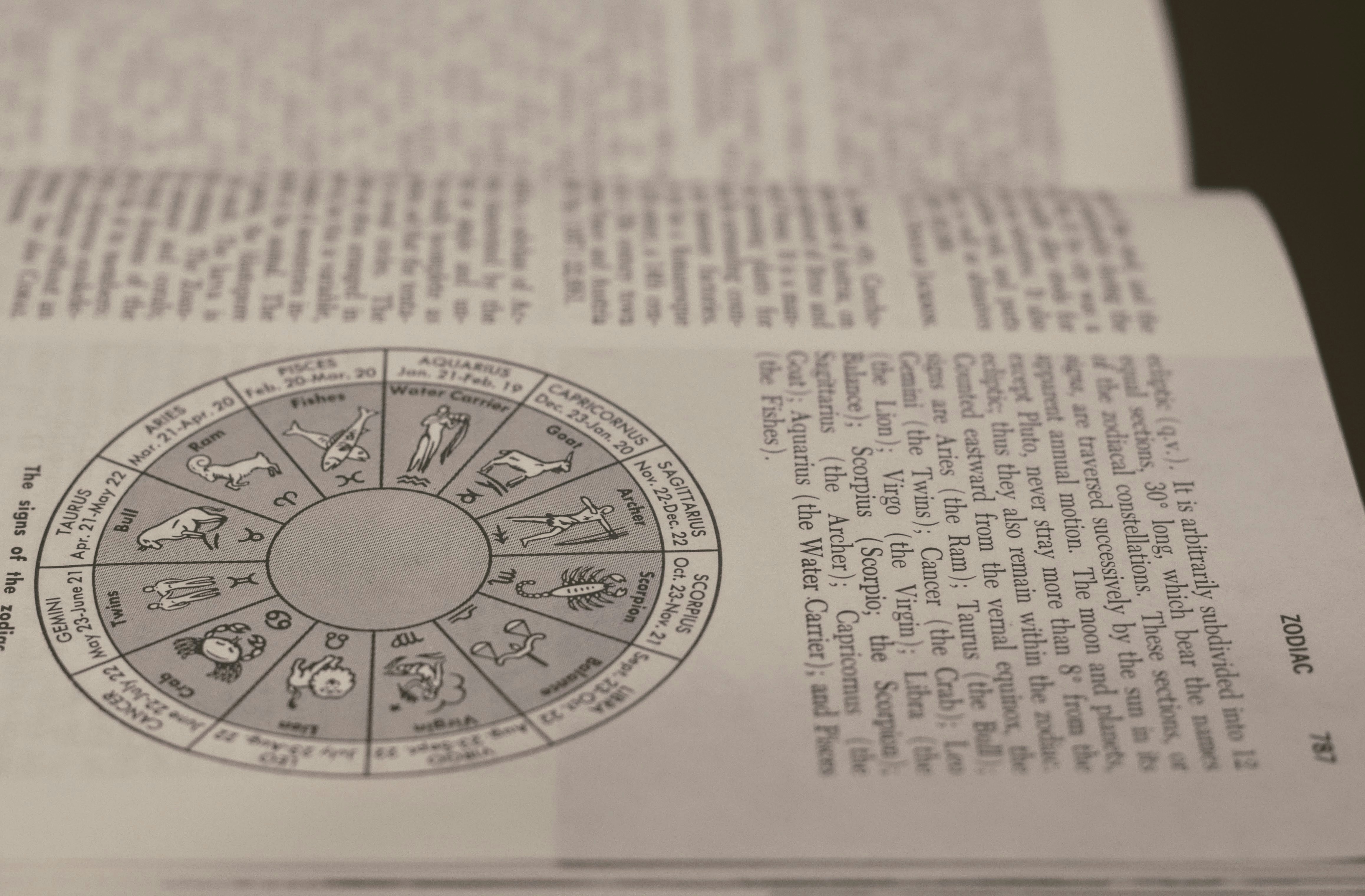
An astrological chart is made up of planets and imaginary points placed across 360 degrees, divided into 12 signs and 12 houses, forming precise angles between them — called aspects. Some harmonious, others tense. Each planet has its own nature, each sign adds a quality, each house points to an area of life. All at once.
The number of possible combinations in a single chart easily exceeds what any human can process exhaustively. But that's not the real problem.
The real problem is that elements in a chart can't be interpreted in isolation. A good astrologer doesn't say: "Sun in Aries — you're energetic. Moon in Capricorn — you're emotionally reserved." Someone with that combination lives with a specific tension between impulse and control, between the drive to act and the need for structure. That's the meaning. Not the sum of the parts, but the relationship between them.
What a good astrologer does is integrate — find the narrative thread, reconcile contradictions, determine what dominates and under what conditions. That requires vast knowledge and the ability to make rapid connections between concepts.
Traditional Astrology Software: Information Without Meaning
Astrology software has been around for decades and it still has its uses. You enter your birth data, you get a 20-page report. The problem is that those 20 pages look something like this:
Mercury in Sagittarius: philosophical, visionary thinking, a tendency to generalize. Direct and enthusiastic communication.
Chiron in Gemini: a wound related to communication and intellect. Possible difficulties in expression or feeling misunderstood.
Jupiter in Aquarius: expansion through innovative ideas, benefit from groups and communities.
Mercury-Chiron opposition: tension between way of thinking and wounds related to communication.
That's it. Paragraph after paragraph, each element in isolation. You make the connections yourself — if you know how. If you don't, you read 20 pages and finish unsure what to do with the information.
The Same Configuration, Interpreted by AI
Now look at how AI handles the same configuration — Mercury in Sagittarius in opposition to Chiron in Gemini, both in a favorable aspect with Jupiter in Aquarius:
The configuration creates a dynamic where the tension between "knowing the truth" (Mercury in Sagittarius) and "healing the way you communicate" (Chiron in Gemini) finds a way out through the innovative and detached perspectives of Jupiter in Aquarius.
Mercury in Sagittarius seeks deep meaning and the big picture — a direct communicator, sometimes too honest, who wants their ideas to be expansive. Chiron in Gemini touches a wound around intellect: the fear of not being heard correctly, the feeling that you're "not smart enough," or that your language itself is a source of pain.
The conflict: there's a battle between the desire to convey something important (Sagittarius) and the insecurity around how you say it (Gemini). You fear that if you speak your truth you'll be judged for the details; if you're too precise, you lose the essence.
Jupiter acts as an objective mediator. Being in Aquarius, it takes neither the side of emotion (Chiron) nor dogma (Mercury), but proposes the path of collective intellect and detachment. The resolution isn't in "fixing" communication — it's in transcending it through ideas that serve the future. Not your ego, but the community.
Do you feel your current tendency is more to withdraw or to become combative when challenged?
The difference isn't in the information — both approaches start from the same data. The difference is in connection. AI treats the chart as a system: tension, causes, dynamics, resolution. And it does something no traditional software can do: it answers specific follow-up questions. Right now, AstroHelps lets you follow up on an already-generated report; starting from your question directly is something I'm still working on.
Why AI Is Well-Suited for This
AI was trained on massive amounts of text — books, articles, transcriptions of astrological interpretations, psychology, philosophy. That means the relationships between concepts are already embedded in it. It knows that "Aquarius," "collective detachment," and "social innovation" form a cluster of meaning. It knows that "Chiron," "wound," and "healing" form another. And it can operate across those clusters simultaneously, at speed.
Which is exactly what reading an astrological chart requires: the ability to make rapid connections between multiple concepts, without fatigue.
There's another advantage that doesn't get mentioned enough: with AI, you can be completely honest. There's no fear of judgment. No awkwardness. If your question is about a relationship that ended because of you, a decision you're ashamed of, a fear you've never told anyone — you say it. Because you know there's a machine on the other end. You delete the conversation after you've read it, and it's gone.
What AI Can't Do
Of course, an astrological reading done by AI won't be qualitatively better than one done by a good astrologer.
Not because AI lacks a "soul" — that's a romantic argument. But because you give an astrologer more than birth data. They see you, hear you, sense you. And they have life experience. A good astrologer adapts the interpretation to the person in front of them, not to the abstract configuration in the chart. AI responds to what you give it, not to who you are. But AstroHelps isn't trying to do everything — it's trying to fill in the missing pieces. That's the idea I started with.
Beyond that, people need confirmation from real people. They need to trust the source of the information — and that's something AI can't offer in the same way, at least not for everyone.
How to Use Both
The question isn't "AI or human astrologer?" It's when you need a human astrologer and when you don't. If you go to an astrologer for the first time on any subject, you won't learn very much — because time is limited.
In ten minutes, AstroHelps gives you a chart with information and connections you wouldn't have seen on your own, questions you wouldn't have thought to ask, and language for what you already sense but haven't articulated. Take all of that to a good astrologer and the conversation is completely different. You're not starting from zero. You know what to ask.
Quantitatively, AI wins clearly: a full reading in minutes, available anytime, at an accessible cost. Qualitatively, a good astrologer wins — but that doesn't mean you need one at every step.
Why I Built This
I saw what astrology could reveal firsthand — something I'll write about separately — and I saw how inaccessible it was for most people. Too expensive if you go to an astrologer, too overwhelming if you try to learn on your own. AstroHelps exists to make this knowledge available to ordinary people.
There's a saying: once something has been given to you, you have an obligation to pass it on. I've put everything into building something genuinely useful and easy to use, after seeing the deep truths that astrological knowledge can reveal. AI and astrology together solve exactly this problem. Not replacing anything — completing it.
One Important Note Before I Close
I don't recommend making important decisions based solely on astrological interpretations — whether from AI or from astrologers. And it's not just about astrology. Priests, specialists of all kinds, even doctors: any information coming from outside should be filtered through your own reason, experience, and intuition. You are the only one responsible for the decisions you make.
But to make good decisions, you first need information and understanding. That's what astrology — and AI in general — can help with.