
The Gauquelin Effect: The Statistical Research of a Skeptic
Michel Gauquelin (1928–1991) was trained as a psychologist and statistician. The research project that launched his career had a clear objective: to test the claims of astrology using rigorous statistical methods and, in its original conception, to demonstrate that those claims could not withstand objective analysis. The results he obtained, after several decades of work and studies involving tens of thousands of cases, did not confirm his initial hypothesis. Instead, they sparked a controversy that lasted for more than half a century and eventually included accusations of data manipulation within the skeptical camp itself.
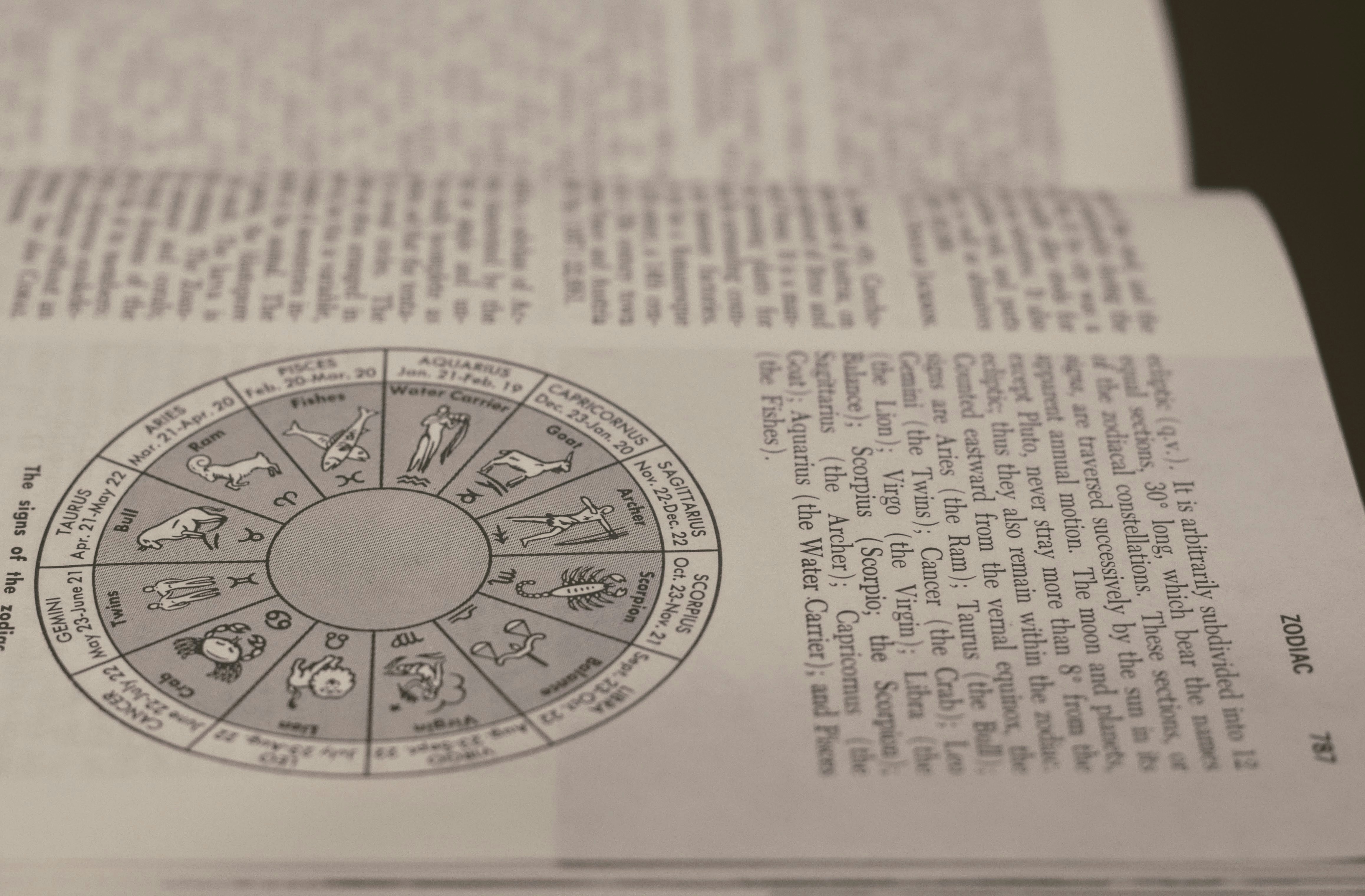
Gauquelin found no statistical correlation for the central concepts of popular astrology—zodiac signs, planetary aspects, or newspaper-style horoscopes. What he did find, however, was a persistent correlation between the position of certain planets at the moment of birth and professions associated with an exceptional level of achievement. The following sections review his principal findings, the criticisms they received, and the current state of the debate.
1. The Mars Effect and the "Key Sectors"
Gauquelin's first major discovery concerned elite athletes. After analyzing the birth data of samples of European champions, he observed that the planet Mars appeared significantly more often than would be expected by chance in two specific regions of the diurnal sky:
- immediately after the planet had risen above the horizon (the region corresponding to the 12th House in traditional astrological terminology);
- immediately after the planet had crossed the point of culmination, the Midheaven (the region corresponding to the 9th House).
These two regions later became known in the literature as the Gauquelin sectors or the key sectors. Based on his initial French sample, Gauquelin estimated the probability that the observed distribution was due to chance at approximately one in a million. This figure was recalculated many times throughout the ensuing debate—both by critics and supporters—but the magnitude of the deviation from the expected distribution remained essentially unchanged across repeated samples.
It is important to clarify what this effect did not show. There was no correlation with Mars' zodiac sign, with Mars' aspects to other planets, or with Mars occupying any other region of the horoscope. The correlation concerned exclusively the planet's physical, astronomical position relative to the horizon and the meridian—that is, its position within the diurnal rotation of the sky, not within the zodiac.
2. Planet–Profession Correlations
Expanding his database to more than 20,000 notable individuals from various fields—including science, medicine, politics, the arts, and sports—Gauquelin identified similar patterns for other planets, but only among people who had achieved an exceptional level of success in their profession. These correlations did not appear in samples drawn from the general population without a criterion of professional eminence.
| Planet in the Key Sectors | Profession Statistically Associated |
|---|---|
| Mars | Elite athletes, career military officers, surgeons |
| Saturn | Scientists, researchers, physicians |
| Jupiter | Actors, politicians, journalists with major public visibility |
| Moon | Writers, especially authors of fiction |
For the Sun, Mercury, Venus, and the three planets discovered after the Hellenistic era (Uranus, Neptune, and Pluto), Gauquelin reported no statistically significant correlation with any professional category.
3. The Hypothesis of Planetary Heredity
A second line of research focused on the intergenerational transmission of these planetary positions. After analyzing thousands of parent–parent–child triads, Gauquelin reported a statistical tendency for children to be born with the same dominant planet in the key sectors as one of their parents.
The most widely discussed aspect of this hypothesis was the observation that the effect almost completely disappeared in medically induced births (whether through labor induction or scheduled Caesarean section), while remaining present in spontaneous births. Gauquelin interpreted this as a possible indication that the onset of labor is not biologically random. However, he did not propose or test any physiological mechanism that could account for the phenomenon.
4. The American Test and the "sTARBABY" Affair
Gauquelin's findings were met with firm skepticism by skeptical organizations of the time, particularly the Belgian PARA Committee and, in the United States, CSICOP (Committee for the Scientific Investigation of Claims of the Paranormal).
Between 1975 and 1978, CSICOP organized its own test, led by philosopher Paul Kurtz, statistician Marvin Zelen, and astronomer George Abell, using a new sample of American athletes. One member of the CSICOP committee, Dennis Rawlins, publicly challenged the way the results had been interpreted. In his article "sTARBABY," published in Fate magazine in October 1981, Rawlins argued that the experiment had actually confirmed the Mars Effect, but that the reporting of the results had been altered in successive stages. The initial proportion of favorable births in the sample (approximately 22%, close to Gauquelin's prediction) was eventually reduced to about 13%—below the level expected by chance—after the later inclusion of a group of 82 names that Kurtz had originally stated he had "forgotten" to submit.
The immediate consequence was Rawlins' removal from the CSICOP executive committee. The episode later sparked an extensive internal debate within the skeptical community, and several participants publicly acknowledged procedural problems in the way the test had been conducted and reported.
5. Suitbert Ertel's Reanalysis and the Problem of Eminence
During the 1980s, the German researcher Suitbert Ertel reanalyzed Gauquelin's data by introducing an objective measure of professional eminence—the number of references to an athlete in encyclopedias, biographical dictionaries, and specialist publications. Ertel demonstrated that the magnitude of the Mars Effect increased in proportion to the athlete's level of eminence: the more exceptional the achievement, the stronger the observed correlation. This finding independently confirmed Gauquelin's original observation that the effect appeared only at the highest end of the performance distribution.
The same reanalysis also uncovered a different kind of problem. Ertel found approximately 1,500 additional athlete records in Gauquelin's working archives that had never been included in the published studies. The data from this unpublished group did not support the effect; in fact, they produced slightly negative results. Why these cases were omitted from the published samples has never been fully clarified, and critics have cited the episode as a possible indication of data selection bias on Gauquelin's side as well—not only among his skeptical opponents.
This nuance is important when evaluating the overall body of research. The available evidence supports neither a simple dismissal of the effect as a statistical artifact nor an unconditional acceptance of every figure published by Gauquelin. What has withstood independent testing and repeated reanalyses—including those conducted by researchers explicitly attempting to disprove it—is the correlation between professional eminence and planetary placement in the key sectors, rather than the precise magnitude originally reported by Gauquelin.
6. Gauquelin's Position and the Legacy of His Research
Following his own discoveries, Gauquelin did not become a supporter of popular astrology, which he continued to criticize as an unvalidated practice. He consistently emphasized three limitations of his findings: he found no evidence supporting the zodiac signs, no evidence for the classical planetary aspects (such as trines and sextiles), and no meaningful correlations for most of the planets in the Solar System. For the limited area that he believed had been empirically validated, he proposed the term "Neo-Astrology" or Cosmobiology—a framework distinct from both traditional and modern astrology, based exclusively on measurable statistical correlations.
The debate over the precise interpretation of Gauquelin's data remains open today within parapsychological and statistical research circles. What is no longer seriously disputed at this stage is the basic empirical observation: the correlation between a planet's position in the diurnal cycle and professional eminence has been replicated by independent researchers, including some whose explicit intention was to disprove it.
One aspect of the discovery—that the two regions of maximum effect corresponded precisely to the 12th and 9th houses in the traditional house system—gave rise to a separate, more technical discussion concerning the different ways in which modern and traditional astrology conceptualize astrological houses. That topic is examined in the following article.
Notes and Sources
-
Rawlins, D. — "sTARBABY," Fate magazine, October 1981. An insider's account of the CSICOP experiment conducted by Paul Kurtz, Marvin Zelen, and George Abell.
-
Ertel, S. — Reanalysis of Gauquelin's data during the 1980s, introducing the criterion of professional eminence and identifying the unpublished athlete dataset.
-
Gauquelin, M. — Published works on the Mars Effect, planet–profession correlations, and the hypothesis of planetary heredity, based on research conducted between the 1950s and the 1980s.
The historical information presented above is drawn from publicly available secondary sources concerning this controversy. Readers interested in the exact methodological details—including sample sizes, statistical methods, and precise significance values—are encouraged to consult the original primary sources.